About Manaslu Circuit Trek Manaslu Circuit Trek is one of the most epic trekking trails in Nepal. People from all around the world come to visit because it is the terrain; one of the beautiful trekking trails in the country, rugged mountains, peaceful valleys, cultures, and wildlife. The mighty Mount Manaslu — one of the highest peaks in the world — looms majestically in the distance, while trekkers are treated to an ever-changing panorama of natural beauty that sticks with them long after they return home.
And this isn’t just a mountain circuit. So it is entirely the story of the lives of the diverse communities that make their home in this part of the world. As trekkers make their way along the path, they walk through isolated Tibetan-influenced villages, where life has largely remained unchanged for centuries. Gurung, Tamang, and Sherpa people co-exist with the land, maintaining their traditional Buddhist traditions. Sama Gaon and Samdo, like many villages along the way, sit nestled in the folds of the Himalayas and give trekkers a rare opportunity to come in contact with the local culture and receive the warmth of traditional hospitality.
Manaslu Circuit Trek Weather The route starts in Arughat, a tiny town tucked in the foothills, and winds up through terraced fields, forests of rhododendrons and oak, and thundering rivers. One of the signature aspects of the trek is the variety of terrain it offers, with trekkers traversing lush subtropical valleys and then ascending high-altitude alpine regions. Trekking by suspension bridges, river valleys, and wide plains flaunted with stone stupas and prayer wheels along the way. The towering snow-capped peaks like Mount Manaslu, Ngadi Chuli, and Himlung Himal greet visitors as they trek the continuous ascent, always a reminder of the majesty of the Himalayas.
The trek has many highlights, one such highlight is reaching Larkya Pass at an altitude of 5,160 meters. The trek reaches its highest point, the pass, with views of the surrounding peaks that are unrivaled. Larkya Pass: This first-day hike is the most physically demanding and mentally taxing part of the trek up to the Larkya Pass but the reward for your efforts at the top is simply ethereal. The pass provides trekkers with a 360-degree view of the surrounding mountains, glaciers, and valleys — one of the highlights of the trip.
As the trekkers descend from Larkya Pass, they start to feel the warmth of lower altitudes as the trail winds through more temperate forests and lush greenery. The trail eventually heads into the Annapurna region, and the route concludes at Besisahar, a well-used entry point for the Annapurna Circuit. Not only a physical challenge, the Manaslu Circuit trek is also a spiritual one. It is both peaceful and inspiring to be surrounded by nature and immersed in local culture.
The Manaslu Circuit trek demands preparation, both physical and mental but the rewards go above and beyond. The remote Manaslu Circuit, which takes trekkers around the entire Manaslu mountain range in the Himalayas, has an adventure that doesn’t just end when the hike itself does — from its amazing views of those snow-capped peaks to racing through the culture of Nepal’s highland communities. Manaslu Circuit is perfect for you and whether you looking for a test of perseverance to forget the world for a moment and get a better understanding of nature and its majesty. It is a journey that goes deep into the heart of Nepal’s Himalayas and shows you a glimpse of the beauty and magic existing in the world’s highest mountains.
The Beginning: A Start for an Adventure
Manaslu Circuit Trek Permit Plus, the experience itself is as much a journey within as it is in the Manaslu Circuit Trek. Nestled in the heart of the Nepal Himalayas, the Manaslu Circuit transports trekkers through diverse landscapes, from subtropical forests to alpine meadows to high-altitude deserts, while providing breathtaking views of Mount Manaslu and surrounding summits. The trip itself is strenuous but gratifying, testing the physical limits of intrepid explorers, while also offering plenty of chances for cultural interactions with local tribes that inhabit the area. The Manaslu Circuit is the perfect adventure for anyone from the experienced hiker, looking to hide secrets off the beaten track, to the first-time adventurer looking for a real adventure. This remote, less-trodden part of Nepal offers trekkers real peace and quietness, along with stagnant natural beauty that you would not find on more popular routes in the country. Trekking through Manaslu is an invitation to navigate the remote and off-the-beaten path, and bask in the majestic expanse of the Himalayas.
The Manaslu Circuit: A Trek Like No Other
One of Nepal’s most exciting and diverse trekking trails is the Manaslu Circuit Trek. Nestled in the Manaslu Conservation Area, the trek challenges adventurers with rugged terrain, culturally vibrant villages, and breathtaking mountain views, all while still being relatively averse to the main tourist trails such as Everest and Annapurna. Everest Base Camp Trek is a blend of nature, adventure, and culture. The trail passes through forests of rhododendron, oak, and pine, meanders through ancient Tibetan settlements, and provides stunning views of some of the world’s highest peaks, including the hulking Mount Manaslu itself. The Manaslu Circuit allows for a real OFF-the-BEATEN TRACK experience, unlike other treks in Nepal. It is relatively less trekked and provides travelers an opportunity to enjoy tranquility without the buzz of tourists. The trek reaches its highest elevation at Larkya Pass (5,160 meters), the peak of the trip where trekkers are offered stunning vistas of the nearby crests, ice fields, and gorges. It’s an adventure, a challenge, a cultural experience, and a scenery bonanza all in one epic adventure.
Why Manaslu Circuit? The Appeal of This Hidden Gem
The Manaslu Circuit is known as one of Nepal’s best-kept secrets, and for good reason. While trails like Annapurna and Everest are teeming with hikers, the Manaslu Circuit feels more authentic and tranquil. Scenic, but not so much the in-field of tourism virgin, allows all hikers to enjoy their wildness and meet local communities without crowds of hikers. The stunning diversity of the Manaslu Circuit is one of its biggest draws. Trekkers traverse an array of landscapes, from subtropical forests to alpine meadows to high-altitude deserts. The trek also affords views of some of the highest peaks in the Himalayas, such as the majestic Mount Manaslu, which stands 8,163 meters tall. This trek also opens the door to cultural insight as one meets the indigenous people of the region: Tamang, Gurung, and Sherpas. With fewer people on the trails and the opportunity to experience the local culture through a tea-house trek, the Manaslu Circuit is one of the best-hidden gems in Nepal and a trek that is beautiful, but not too well-trodden.
When To Do The Manaslu Circuit Trek
The ideal seasons to trek the Manaslu Circuit are spring (March- May) and autumn (September–November). The conditions are generally good during these months, with stable weather, clear skies, and moderate temperatures, making for ideal trekking conditions. Spring brings with it colorful ranger views of blooming rhododendrons and wildflowers and autumn has its crisp air and spectacular views of snow-peaked mountains. These seasons are considered the most popular trekking times in Nepal, so while you’ll encounter more trekkers on the trail, the pass is still far less crowded than more popular treks like Everest or Annapurna. Winter (December to February) is the least suitable time, as temperatures are cold, and snow at higher altitudes can make some sections of the trail impassable. The monsoon season is not a good time to go either (June to August), since heavy rains can create slippery trails, landslides, and poor visibility that can make the trek hazardous. Spring and autumn are certainly the best times to do the Manaslu Circuit Trek for good weather and the best trekking conditions.
Necessary Permits and Requirements for the Trek
This trek goes through a restricted area of Nepal, so trekkers need to get a few permits prior to trekking on this journey. If you plan to trek in the Manaslu region, the most significant permit you need is the Restricted Area Permit (RAP). This permit, which is only relevant in groups of a minimum of two trekkers, will need to be arranged through a licensed trekking agency. Besides RAP, trekkers also need to obtain the Manaslu Conservation Area Permit (MCAP) and the Annapurna Conservation Area Permit (APAP). These are required to enter the conservation areas through which the trek runs. Also, trekkers require a TIMS (Trekkers’ Information Management System) card. Any permits you need can be organized through a licensed trekking agency in Kathmandu or at the Nepal Tourism Board office. Keep in mind, however, that one cannot obtain the permits individually, and a guide/porter must be hired when trekking the route. These regulations are key in protecting the environment and keeping trekkers safe in remote regions.
Step 1: Detailed Trekking Itinerary Advantage
Generally, the Manaslu Circuit Trek can be accomplished in 14-16 days. Starting the drive to Arughat (beginning of the trek from Arughat to Manaslu so not in the vehicle for the duration of the trek). From there, trekkers follow a well-marked trail through the verdant hills, passing villages like Soti Khola and Machhakhola, where trekkers can start to acclimatize to the altitude. Moving deeper into the Manaslu region, the landscape changes as dense rhododendron forests and views of other distant snow-covered peaks offer themselves. Three key stops along the trek — Namrung, Sama Gaon, and Samdo — allow trekkers to have rest days to acclimatize and soak in the culture of local Tibetan-influenced communities. After a night of respite in Samdo, trekkers move on to Dharamsala and then climb Larkya Pass, the trek’s highest point at 5,160 meters. The ascent to the pass is steep but rewarding, with spectacular views of the surrounding peaks. Once over the pass, trekkers descend through Annapurna, eventually returning to Besisahar to finish the trek. It includes rest days for acclimatization, to ensure trekkers remain healthy and safe as they get used to the higher altitudes. This trek combines adventure, culture, and spectacular scenery.
Manaslu Circuit: Tal (Magnitude Approx. 5,308 m)
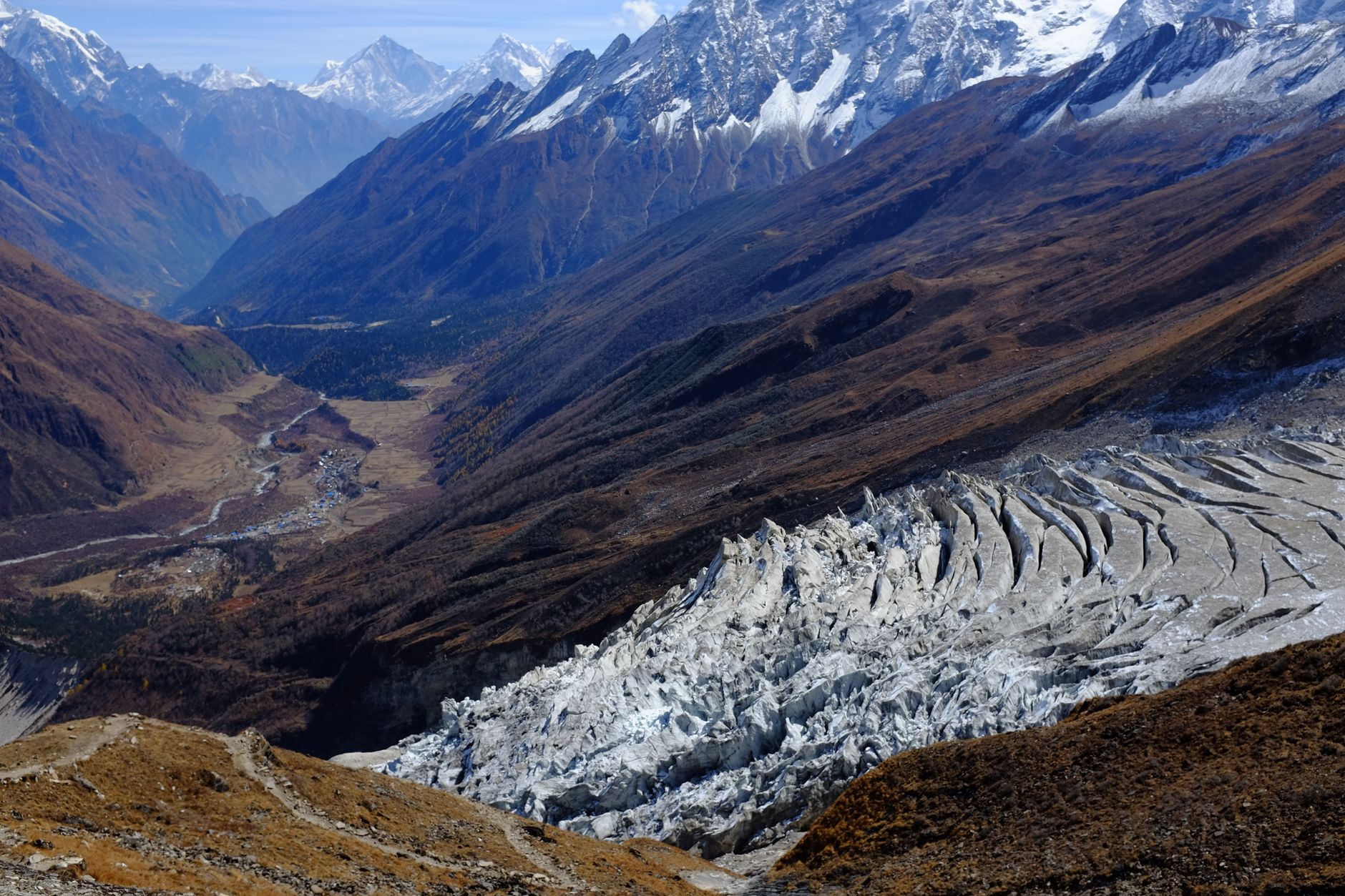
You are the magical power experience of nature in Nepal on the Manaslu Circuit Trek. The trek takes you through varied terrain, each more gorgeous than the last. Beginning in the verdant subtropical forests of the lowlands, the trail gradually climbs through terraced rice fields and thick forests of rhododendrons. The scenery becomes alpine meadows as you gain altitude, and tall snow-capped peaks start to be glimpsed over the horizon. The highlight of the trek is the stunning views of Mount Manaslu, the eighth-highest peak in the world, looming over the horizon. Along the way, trekkers are also met by glaciers, pristine rivers, deep gorges, and delightful Himalayan villages. The Manaslu Circuit Trek is 177 km long and takes 12–14 days to complete, presenting the natural wonders of the Manaslu Conservation Area in the vivid combination of mountains, valleys, and glaciers. The diverse landscape doesn’t just treat the eye; it spices up the trek as well, switching up the scenery with every few meters you gain in the upward direction! Crossing high-altitude passes, such as Larkya Pass (5,160 meters), offers unbeatable views of surrounding peaks, including Himlung Himal, Cheo Himal and Ngadi Chuli. The Manaslu Circuit is a trek of constant awe and amazement thanks to the diversity in landscapes, from subtropical valleys transitioning into barren high-altitude deserts.
Exploring the Deep Tradition and Culture of the Area
Manaslu Circuit Trek Larkya La Pass One of the greatest benefits of the Manaslu Circuit is the rich cultural experience. It is inhabited by various ethnic groups, such as the Gurung, Tamang, and Sherpa, each with its own language, culture, and customs. The trek gives travelers the opportunity to meet these local communities and see a way of life that has remained largely the same for centuries. Trekkers cross through communities including Soti Khola, Namrung, and Samdo, where they can witness traditional forms of Tibetan-influenced Buddhism. The prayer flags, stone stupas, and monasteries lining the trail are a reminder of its heritage and spirituality. Visitors are frequently invited to witness the rituals carried out by natives and learn about their way of life and agriculture closely tied to the surrounding harsh environment and breathtaking scenery. The architecture of the region, with its stone houses and Tibetan-style buildings, also adds to the cultural wealth. Trekkers may be welcomed into local homes for a hot cup of tea, providing an intimate connection to the people and the opportunity to hear the tales of the region’s history. It is an experience to humbly live with locals and experience their way of life.
Flora and Fauna: Nature’s Bounty Along the Trail
Manaslu Circuit Trek Difficulty An introduction to the environment and biodiversity The best of Manaslu Circuit is its natural beauty. Along the trek, different ecological zones support their own unique vegetation and wildlife. The lower altitudes are cloaked in subtropical forests of sal, oak, and rhododendrons, while trekkers ascend, admiring views of alpine meadows and mossy forests. The landscape is also covered with wildflowers in spring, including colorful rhododendrons. The trail is “also a refuge for wildlife, some rare, some endangered.” The Manaslu Conservation Area is a refuge for animals such as the snow leopard, Himalayan tahr, and musk deer. The dense forests and rugged terrains provide a stronghold to diverse avifauna such as pheasants, golden eagles, and the brightly colored Himalayan monal. For botanists, the journey is a chance to observe many of the plant species that are native to the region, from herbs used in medicine to rare orchids. Manaslu region is an ecological corner of importance due to its untouched environment. I personally love the fact that the trek goes through diverse terrain, from villages to thick jungles, so there can be a little bit of everything on the path to base camp, as well as how the flora and fauna constantly change as you climb higher (not to mention the wildlife!) adding a bit of thrill and wonder to the journey.
The Larkya Pass | The Hardest and Who Weathered It
The Larkya Pass, at an elevation of 5,160 meters (16,929 feet), is the highest point of the trek, and one of the most exciting and challenging parts of the Manaslu Circuit. It is one of the most challenging and physically demanding sections of the entire trek which requires plenty of physical stamina and mental strength. The climb up to Larkya Pass is strenuous, as trekkers must traverse steep, rocky paths that may be slippery from snow or ice. Altitude is also a problem with trekkers feeling symptoms of altitude sickness. The effort is worth it for the views from the past. Trekkers are rewarded at the top with sweeping views of the region’s highest peaks, including Manaslu, Himlung Himal, and Cheo Himal. The rest of the journey down from the pass can be brutal as well, especially on loose rocks and steep sections, but nothing compares to the satisfaction of passing through the pass itself. It’s essential to adapt well and prepare accordingly to get through this safely—and lots of trekkers declare Larkya Pass as the best part of the entire trek.
Food and Accommodation: Manaslu Circuit Trek
If you are hiking the Manaslu Circuit, expect to find an assortment of lodgings on the path, mostly in tea homes or cabins. These lodges offer simple but necessary shelter from the elements after hours of trekking each day. At tea houses, rooms are small and barebones, with a bed, blankets, and, at times, hot showers (less common the higher up you get). Although the accommodations become more primitive as you climb, the camaraderie offered by the tea houses is a key element of the trekking experience. The food served along the trail is mostly traditional Nepali fare — dal bhat (lentils and rice) — and simple Western food — pasta, noodles, and pancakes. Local vegetables and meat, usually yak or goat, are common (food is cooked in the tea houses). Because the trek is remote, trekkers are encouraged to bring their own snacks for energy along the way. Throw in the chance to eat with other trekkers and local guides in these small, intimate settings and you have the makings of a community spirit for the journey. Out there, even simple lodgings, combined with beautiful settings, and welcoming locals, make tea house stays a highlight of the Manaslu Circuit adventure.
Preparation, Gear, and Safety Tips for Success
Manaslu Circuit Trek Best Time This means that, unlike I had tried — I put together these 8 tips for getting ready for a trip to trek the Manaslu Circuit. Primarily, you need to be physically trained for this trek, which can mean days of hiking in rugged terrain, often at high altitudes. Cardiovascular fitness, strength training, and exercises to build eventually stamina — are crucial for trekking at over 5,000 meters. In terms of gear, a good sleeping bag, warmer layers, waterproof clothing and a good pair of socks and hiking shoes are prerequisites. And don’t be afraid to pack a pair of trekking poles to help you stay stable on uneven terrain. Be sure to pack light but bring necessary items like a first-aid kit, water purification tablets, and a headlamp. Acclimatization is critical for safety, so it’s important to include rest days in your itinerary to avoid altitude sickness. It is also recommended to hire a guide or porter, they can help with navigation as well as give you useful local information. The trek includes a few gnarly high-altitude crossings, so staying hydrated, well-fed, and taking your time are key to keeping your energy levels high. Lastly, make sure you have the right permits and knowledge of the Manaslu Conservation Area regulations. An adventure on the Manaslu Circuit can be excellent, provided you are well prepared; it would ensure a very genuine outback Himalayan experience.