
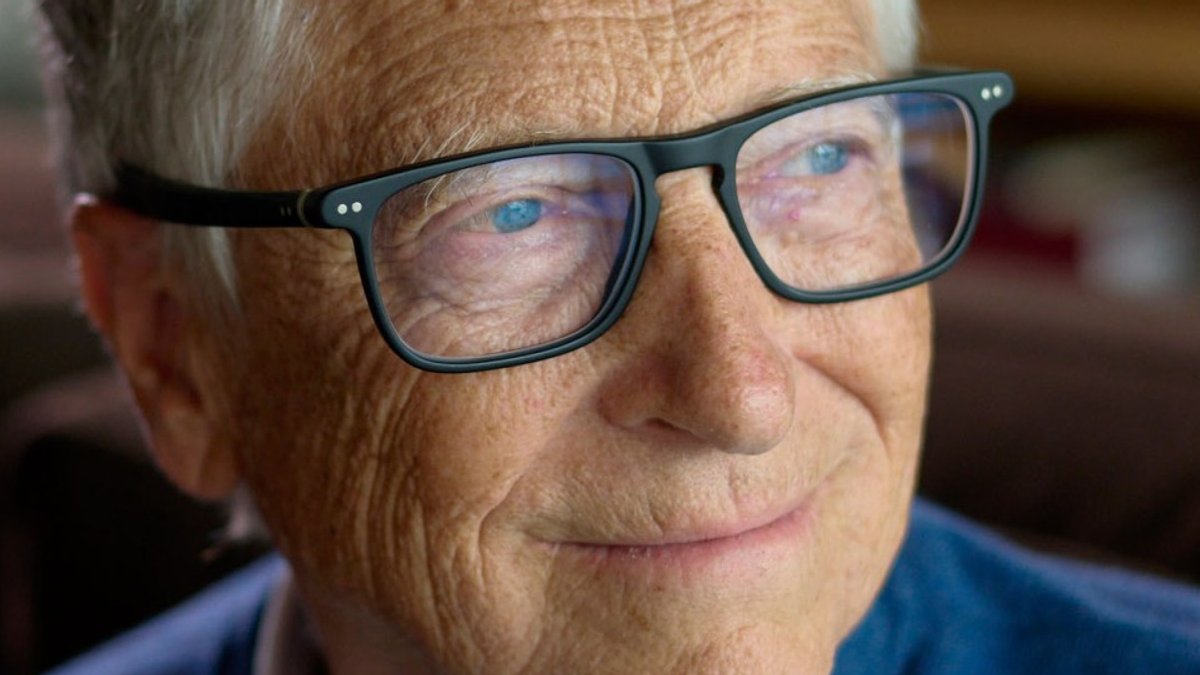
Product executives don’t usually end up on rocket company boards. Product executives who spent the last few years shaping ChatGPT even less so. But that’s exactly what happened this week, when Kevin Weil — a name better known in consumer tech circles than aerospace ones — joined the board of directors at Stoke Space, a Kent, Washington-based startup trying to solve a problem that has defeated even SpaceX: building a rocket that comes back from orbit completely intact, every time.
The announcement, made public on July 7, 2026, is easy to read as just another executive reshuffle. It isn’t. Weil’s move says something specific about where Silicon Valley’s most experienced product minds think the next decade of hard technology is heading, and it says something about Stoke Space’s ambitions as it approaches the first flight of its Nova rocket. This piece goes past the press release to explain who Weil actually is, what Stoke Space is trying to build, and why this particular pairing makes more sense than it might first appear.
Table of Contents
The Announcement: A New Board Seat at a Pivotal Moment
Stoke Space confirmed Weil’s appointment through an official announcement, describing him as bringing “deep product leadership experience” to a company that is entering one of the most consequential stretches of its six-year history. The timing is not incidental. Stoke has spent years in development mode, and the company is now closing in on an operational launch vehicle — the point at which technical promises either become flight-proven hardware or stay promises.
Andy Lapsa, Stoke’s co-founder and CEO, framed the appointment around this exact inflection point, noting that Weil’s experience would be valuable as the company advances toward commercial operations. That phrasing matters. Boards typically get reshaped when a company’s needs change, and a startup moving from engineering-driven development into commercial execution needs different expertise than one still proving its core technology works.
Who Is Kevin Weil? Two Decades Behind the Screens We All Use
If you’ve used Instagram, tweeted, checked a satellite image on Planet Labs’ platform, or typed a prompt into ChatGPT, you’ve used a product Kevin Weil helped build or scale. That’s not a marketing exaggeration — it’s a fairly literal summary of a career that spans more than twenty years across four companies that each reshaped how hundreds of millions of people use the internet.
Weil held senior product roles at Twitter and at Instagram during Meta’s ownership, periods when both platforms were fighting to define what mobile-first social media even looked like. He later became president of Planet Labs, a satellite Earth observation company, and was part of the leadership team that took it public in 2021. Most recently, he held senior leadership positions at OpenAI, where he was closely involved in scaling the trust and product decisions shaping OpenAI’s public direction during one of the most scrutinized periods in the company’s history.
From Physics Labs to Product Launches: Weil’s Formative Years
What’s less discussed in the coverage of this appointment is Weil’s academic background, which turns out to be more relevant to a rocket company than his social media résumé might suggest. He earned a bachelor’s degree in physics and mathematics from Harvard University, graduating summa cum laude, followed by a master’s degree in physics from Stanford. Before pivoting toward consumer technology, his early academic focus sat in theoretical and applied physics — the same broad discipline that underpins propulsion, thermal management, and structural engineering, the exact problems Stoke Space is trying to solve with Nova.
This is a detail most coverage of the appointment mentions in passing, if at all, but it’s a meaningful piece of context. A board member with formal physics training is better positioned to engage substantively with engineering trade-offs than one relying purely on business intuition, even if Weil’s day-to-day contribution is expected to center on product and commercial strategy rather than propulsion design.
Planet Labs and the First Brush With Space
Weil’s Stoke Space appointment is frequently described as his entry into the space industry, but that framing undersells his history. His three years as president of Planet Labs put him directly inside a space company during a formative stretch — one that included navigating the operational complexity of running a constellation of Earth-imaging satellites and the process of taking that business public.
That experience matters for a specific reason: Planet Labs is a downstream space company, one that depends entirely on affordable, reliable access to orbit to fly its satellites. Someone who has spent years as a customer of the launch industry, waiting on manifests and absorbing launch costs into a business model, arrives at a launch provider’s board with a genuinely different perspective than a first-time space investor would.
The OpenAI Chapter: Product Chief to Vice President of Science
Weil’s most recent chapter, at OpenAI, is the one drawing the most attention, and understandably so — it’s the freshest and highest-profile line on his résumé. He held senior product leadership responsibilities at the company during the period when ChatGPT went from a research demo to one of the fastest-adopted consumer products in history, and more recent reporting describes his focus shifting toward applying AI to scientific research and discovery.
That trajectory — from scaling a mass-market AI product to focusing specifically on AI’s application in scientific domains — lines up closely with what a company like Stoke Space actually needs. Rocket development sits at the intersection of hard physical engineering and increasingly data-heavy, software-driven iteration. Someone who has spent recent years thinking about how AI accelerates scientific and engineering workflows brings a genuinely relevant lens, not just a recognizable name.
What Is Stoke Space, and Why Does Nova Matter?
Stoke Space was founded in 2019 by Andy Lapsa and Tom Feldman, both of whom came out of Blue Origin’s engineering ranks before starting their own company. Their goal from the outset was ambitious even by aerospace startup standards: build a rocket where both the first-stage booster and the upper stage are fully reusable, not just recovered and refurbished, but genuinely designed to fly again with minimal turnaround.
That rocket is called Nova, a medium-lift launch vehicle designed to support what the company describes as aircraft-like launch frequency — the idea that a rocket should be able to fly, land, get inspected, and fly again on a timeline measured in days rather than months. It’s a vision that connects directly to the kind of broader technology trends reshaping entire industries around speed, iteration, and cost reduction.
The Full-Reusability Problem No One Has Solved
It’s worth being precise about why Stoke’s goal is genuinely hard, because “reusable rocket” has become something of a buzzword since SpaceX normalized booster landings. SpaceX’s Falcon 9 reliably recovers its first-stage booster, and its much larger Starship vehicle is working toward recovering both stages. But even SpaceX has not yet achieved routine, fully reusable flight across an entire operational vehicle at scale.
The specific challenge is the upper stage. Boosters separate at relatively survivable speeds and altitudes. Upper stages travel much faster and re-enter the atmosphere under far more extreme heat and stress, which is why most rockets historically discard them entirely after a single use. Stoke’s approach uses a heat shield integrated directly into the engine structure, with cooling channels that circulate propellant to absorb and manage that heat — effectively turning the vehicle’s skin into an active thermal management system rather than a passive barrier. Even Blue Origin, where both Stoke founders previously worked, has explored full reusability without prioritizing it at the level Stoke has.
Andy Lapsa’s Origin Story and the Y Combinator Connection
Part of what makes Weil’s appointment notable is that it isn’t a cold introduction. Lapsa has described first meeting Weil around the time Stoke joined Y Combinator’s Winter 2020 accelerator batch, a period when the company was still working out fundamentals like fundraising strategy and how Silicon Valley venture networks actually operate — knowledge an aerospace engineer doesn’t automatically have. That kind of early-stage advisory relationship, built over roughly six years before formalizing into a board seat, tends to produce a different quality of board involvement than an appointment made purely for a name.
The Y Combinator connection is also a useful reminder of how much of today’s hard-tech ecosystem still traces back to accelerator and incubator programs built primarily for software startups, now increasingly stretching into capital-intensive physical engineering companies that need very different playbooks once they leave the program.
Following the Money: Stoke’s $1.34 Billion Funding Trail
Stoke Space has raised approximately $1.34 billion since its founding, including a $510 million Series D round in 2025 — funding that places it firmly among the best-capitalized private launch companies outside of SpaceX itself. Investors have included Breakthrough Energy Ventures and Founders Fund, alongside continued backing from Y Combinator.
Notably, Weil himself was an early investor in Stoke before joining its board, backing the company alongside his wife Elizabeth through their fund, Scribble Ventures. That detail reframes the board appointment slightly: this isn’t a case of a company recruiting an outside executive cold, but of an early believer formalizing a relationship that predates most of the company’s major funding rounds. For a broader look at how capital-intensive companies structure this kind of late-stage funding, recent tech IPO and late-stage funding activity offers useful comparative context on how private valuations translate into public market readiness.
Government Backing: Space Force, DIU, NASA, and the Defense Angle
Private capital is only part of Stoke’s funding picture. The company’s technology development has also been supported by the United States Space Force, the Defense Innovation Unit, NASA, and the National Science Foundation — a mix of government and private backing that reflects how deeply national security and civil space priorities are now intertwined with commercial launch development.
This is where another piece of Weil’s background becomes directly relevant. He was one of a small group of prominent technology executives who joined the U.S. Army Reserve in recent years, an initiative aimed at improving cooperation and recruitment ties between the military and the tech industry. Combined with the kind of trust and safety experience relevant to navigating cybersecurity and national security considerations in technology companies, that background gives him a genuinely useful vantage point as Stoke pursues military contracts, which Lapsa has indicated will be central to the company’s long-term success.
Why an AI Product Executive on a Rocket Company’s Board Makes Sense
It’s tempting to read Weil’s appointment as simply borrowed prestige — a recognizable Silicon Valley name lending credibility to a hardware startup. That reading misses something important about how modern aerospace companies actually operate. Rocket development today involves enormous amounts of simulation, sensor data, and iterative testing, workflows that increasingly resemble software development cycles more than traditional aerospace’s slower, document-heavy processes.
Companies building genuinely autonomous systems that operate with minimal direct human input increasingly need executives who understand both the engineering constraints and the product discipline required to ship complex systems reliably at scale — exactly the combination Weil’s career represents, even if his direct engineering contribution to Nova’s design will be limited.
The OpenAI-SpaceX-Stoke Speculation Explained
One thread running through coverage of this appointment deserves direct treatment: speculation about whether Weil’s move creates a connection between OpenAI and Stoke Space. Reports have suggested that OpenAI’s Sam Altman explored a potential investment in Stoke last year, a notable detail given that SpaceX, Stoke’s most direct competitor, is run by Elon Musk, who has been publicly and legally at odds with Altman and OpenAI over the company’s direction and structure.
Lapsa has declined to comment on what he characterized as “gossip and rumors” regarding OpenAI’s involvement, stating instead that Weil’s role is focused on Stoke itself. That’s a reasonable position for a CEO to take publicly, and readers should treat any deeper OpenAI-Stoke relationship as unconfirmed speculation rather than established fact. For context on the broader tension shaping this narrative, the ongoing legal disputes between Musk and OpenAI help explain why any perceived overlap between OpenAI-linked executives and a SpaceX competitor draws immediate attention, warranted or not.
Space Data Centers: The Idea Reshaping Investor Interest in Reusability
One of the more genuinely novel threads in Stoke’s story is the growing venture capital interest in orbital data centers — the idea of placing computing infrastructure in space to take advantage of continuous solar power and sidestep terrestrial political and regulatory restrictions on energy-intensive computing.
Lapsa has pointed out that this concept only becomes economically viable with full rapid reusability, since the cost of launching enough computing hardware into orbit is prohibitive under current, partially-reusable launch economics. If that thesis holds, Stoke’s specific bet on complete reusability — rather than the partial reusability SpaceX has achieved — could position it as a key enabler for an entirely new category of infrastructure, one directly relevant to the compute demands of large AI systems, an area where Weil’s OpenAI background gives him unusually direct insight.
What This Signals About the AI-to-Aerospace Talent Pipeline
Weil’s move is part of a broader, still-forming pattern: experienced product and engineering leaders from the consumer AI boom increasingly moving toward “hard tech” sectors — aerospace, energy, robotics — where physical constraints can’t be iterated away with a software update. This mirrors a wider shift visible in how AI is reshaping career paths across the technology industry, pulling talent away from purely digital products and toward domains where AI expertise intersects with physical infrastructure.
It’s also worth situating this within the wider AI industry landscape, where competitive dynamics among model providers continue to shape talent movement. The kind of pressure reflected in the competitive challenges facing AI labs like Mistral is part of why experienced operators are increasingly weighing opportunities outside the crowded frontier-model race altogether, looking instead toward adjacent industries where their skills are scarcer and more differentiated.
What Comes Next for Stoke Space and Kevin Weil
For Stoke Space, the near-term roadmap is straightforward to state and difficult to execute: get Nova to its first flight. Lapsa has indicated the company has “a good chunk of the risk behind” it, while acknowledging meaningful work remains before the vehicle is ready to fly. Reporting has suggested a potential flight window within 2026, though aerospace timelines are notoriously prone to slippage, and no fixed date has been publicly committed to at the time of this article.
For Weil, neither OpenAI nor Stoke Space has indicated that the board appointment will affect his existing responsibilities, suggesting this is being treated as an addition to his portfolio of commitments rather than a departure from AI work. He also continues to serve on the boards of Cisco and The Nature Conservancy, and holds a term membership with the Council on Foreign Relations — a governance workload that places Stoke Space alongside an already substantial set of outside commitments.
Frequently Asked Questions
Who is Kevin Weil?
Kevin Weil is a technology executive with more than two decades of product leadership experience at Twitter, Instagram (Meta), Planet Labs, and most recently OpenAI, where he held senior roles including product leadership tied to ChatGPT’s growth and, more recently, a focus on applying AI to scientific research.
What is Stoke Space?
Stoke Space is a Kent, Washington-based aerospace startup founded in 2019 by former Blue Origin engineers Andy Lapsa and Tom Feldman. It is developing Nova, a medium-lift launch vehicle designed to be fully and rapidly reusable across both rocket stages.
Why is full reusability harder than what SpaceX has already achieved?
SpaceX routinely reuses first-stage boosters, but upper stages travel faster and face far more extreme reentry heat, which is why most rockets, including most SpaceX vehicles in regular service, still discard their upper stages. Stoke’s approach uses an integrated, actively cooled heat shield to attempt full recovery of both stages.
Does Kevin Weil’s move mean OpenAI is investing in Stoke Space?
There is no confirmed OpenAI investment in Stoke Space. Reports have noted that OpenAI’s Sam Altman explored a potential investment previously, but Stoke’s CEO has explicitly declined to comment on this, describing it as unconfirmed speculation.
How much funding has Stoke Space raised?
Stoke Space has raised approximately $1.34 billion in total funding, including a $510 million Series D round in 2025, with backing from investors including Breakthrough Energy Ventures, Founders Fund, and Y Combinator.
Was Kevin Weil already involved with Stoke Space before joining the board?
Yes. Weil was an early investor in Stoke Space alongside his wife, Elizabeth, through their fund Scribble Ventures, and had an advisory relationship with CEO Andy Lapsa dating back to around when Stoke joined Y Combinator’s Winter 2020 batch.
What role does the U.S. government play in funding Stoke Space?
Stoke’s technology development has received support from the United States Space Force, the Defense Innovation Unit, NASA, and the National Science Foundation, reflecting close ties between commercial launch development and national security and civil space priorities.
What is the “space data center” concept mentioned in connection with Stoke?
It refers to a proposed concept of placing computing infrastructure in orbit to take advantage of continuous solar power and avoid terrestrial regulatory constraints. Stoke’s CEO has said this idea only becomes economically viable with fully reusable launch vehicles like Nova.
Will Kevin Weil leave OpenAI to join Stoke Space full-time?
Neither company has indicated that his board appointment affects his existing responsibilities at OpenAI. The Stoke Space board role appears to be an addition to his existing commitments rather than a replacement for them.
When will Stoke Space’s Nova rocket first fly?
Stoke Space has not publicly committed to a fixed launch date. Some reporting has suggested a possible flight within 2026, but the company’s leadership has emphasized that Nova will fly once it is genuinely ready rather than against a fixed deadline.
What other boards does Kevin Weil serve on?
Beyond Stoke Space, Weil serves on the boards of Cisco and The Nature Conservancy, and holds a term membership with the Council on Foreign Relations.
Conclusion
Strip away the headline-friendly framing of “OpenAI executive joins rocket startup,” and what’s left is a more interesting story: an early investor and longtime informal advisor formalizing a relationship with a company he’s watched closely since its earliest, most uncertain days, at the exact moment that company needs to prove its core technical bet actually works. Whether Nova becomes the first genuinely, fully reusable rocket — or joins the long list of aerospace ambitions that took longer than promised — Weil’s appointment says something clear about where experienced technology operators think the next hard problems worth solving actually are. Increasingly, they’re not purely digital ones.



Leave a Reply