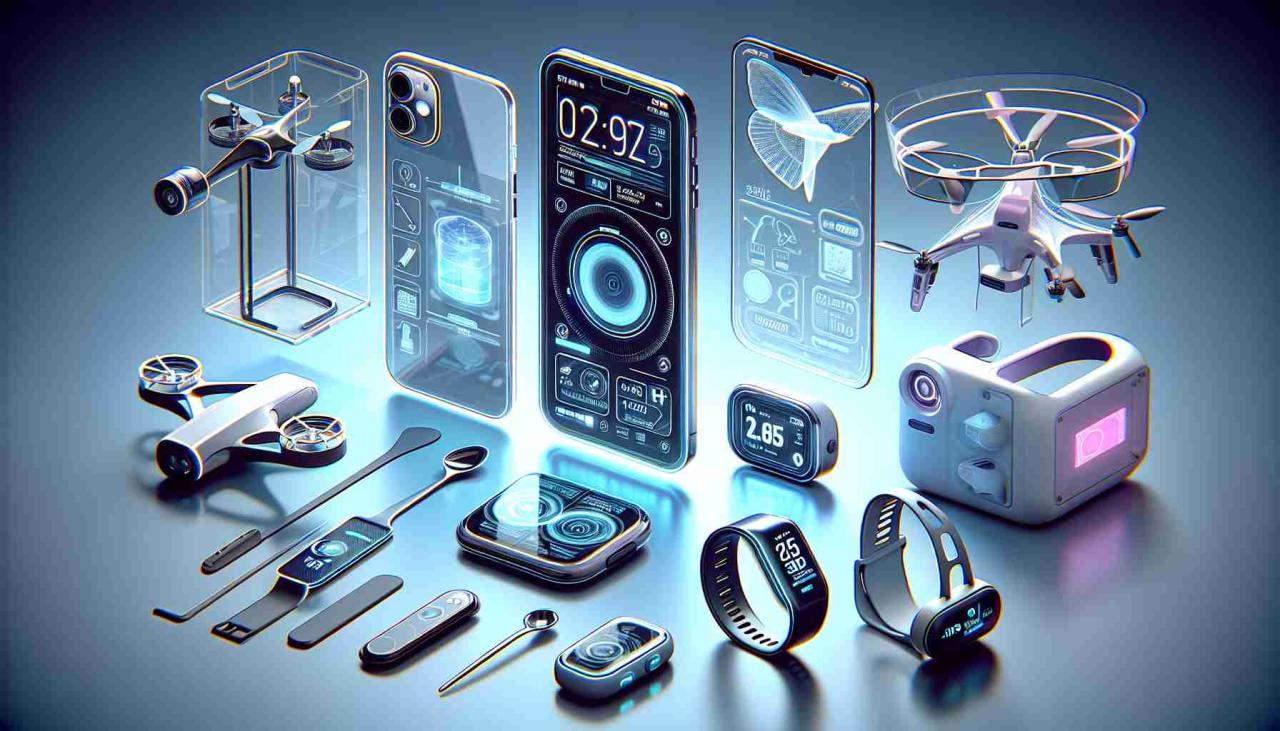
The Quiet Dominance of Gadgets
Gadgets have become silent operators within Hyperconnected Era. Their influence is pervasive yet understated, shaping behaviors without demanding attention. From waking routines governed by smart alarms to evening rituals curated by entertainment devices, gadgets orchestrate moments both mundane and significant.
They do not merely assist. They recalibrate expectations. Speed becomes normal. Accuracy becomes assumed. Delay feels anomalous. Through incremental integration, gadgets redefine what efficiency looks like and how convenience is measured.
Small devices. Large consequences.
From Mechanical Curiosities to Intelligent Gadgets
The historical arc of gadgets reveals a transition from mechanical ingenuity to computational intelligence. Early devices emphasized physical cleverness—springs, gears, levers. Modern iterations emphasize cognition, relying on sensors, processors, and adaptive logic.
This shift has expanded functional scope. Gadgets now interpret environments, learn preferences, and respond dynamically. Static operation has given way to contextual awareness. A device no longer waits passively; it anticipates.
Such anticipation elevates utility while introducing complexity. The challenge lies in ensuring that intelligence enhances rather than overwhelms.
The Engineering Substrate of Modern Gadgets in the Hyperconnected Era
Beneath sleek surfaces lies an intricate lattice of engineering decisions. Gadgets are constrained by space, power, and thermal limits. Every component must justify its presence. Redundancy is minimized. Efficiency is paramount.
Miniaturization drives innovation. Components shrink while performance expands. Energy harvesting, low-power processors, and advanced battery chemistries sustain prolonged operation. Heat dissipation becomes an exercise in spatial optimization.
The result is a dense synthesis of precision and restraint. Elegant, but unforgiving of error.
Interaction Design and the Human Interface
The success of gadgets increasingly depends on interaction fluency. Interfaces must feel intuitive without being simplistic. Gestures replace buttons. Visual hierarchies guide attention. Feedback reassures intent.
This is not accidental. Interaction design blends psychology, ergonomics, and semiotics. The best gadgets communicate through subtle cues rather than instruction manuals. A gentle vibration confirms action. A smooth transition implies continuity.
When design aligns with instinct, friction dissolves. When it does not, frustration escalates rapidly.
Gadgets Within Interconnected Ecosystems
Isolation diminishes relevance. Modern gadgets thrive within ecosystems, exchanging data and coordinating behavior. A single device becomes exponentially more valuable when integrated with others.
This interconnectivity enables orchestration. Lighting responds to presence. Wearables inform health platforms. Environmental sensors adjust climate controls. These interactions occur continuously, often invisibly.
However, dependence on ecosystems introduces fragility. Compatibility, security, and data governance become central concerns. Trust is earned through reliability and transparency.
Cognitive and Behavioral Impacts of Gadgets
Gadgets alter cognition by externalizing memory and automating routine decisions. Reminders replace recollection. Recommendations replace deliberation. The mental load shifts.
This redistribution can enhance focus and productivity. It can also erode attentiveness if unchecked. The balance between assistance and dependency defines the quality of engagement.
Well-designed gadgets support autonomy. Poorly designed ones diminish it. The distinction lies in intentionality.
Materiality, Aesthetics, and Emotional Resonance
Despite their technical nature, gadgets evoke emotion. Material choices influence perception. Cold metal suggests precision. Soft polymers suggest approachability. Weight implies substance or portability.
Aesthetics are not superficial. They communicate values. Minimalism conveys restraint. Ornamentation conveys expression. These cues shape emotional attachment.
This attachment explains why certain gadgets inspire loyalty beyond rational evaluation. They feel personal, even when mass-produced.
Sustainability and the Moral Trajectory of Gadgets
Proliferation invites accountability. The environmental footprint of gadgets has become an unavoidable consideration. Short lifecycles and electronic waste challenge sustainable progress.
In response, durability and repairability regain prominence. Modular designs, recyclable materials, and extended software support redefine value. Longevity becomes aspirational.
Consumers increasingly reward responsible design. Ethics and innovation are no longer separate conversations.
The Future Direction of Gadgets
The future of gadgets trends toward subtlety. Devices will become more ambient, more context-aware, less obtrusive. Interaction will shift from explicit commands to inference and presence.
Yet complexity will persist beneath simplicity. The most successful gadgets will be those that conceal sophistication behind calm interfaces. They will do much while appearing to do little.
In this quiet evolution, gadgets will continue to shape daily life. Persistently. Precisely. Almost invisibly.