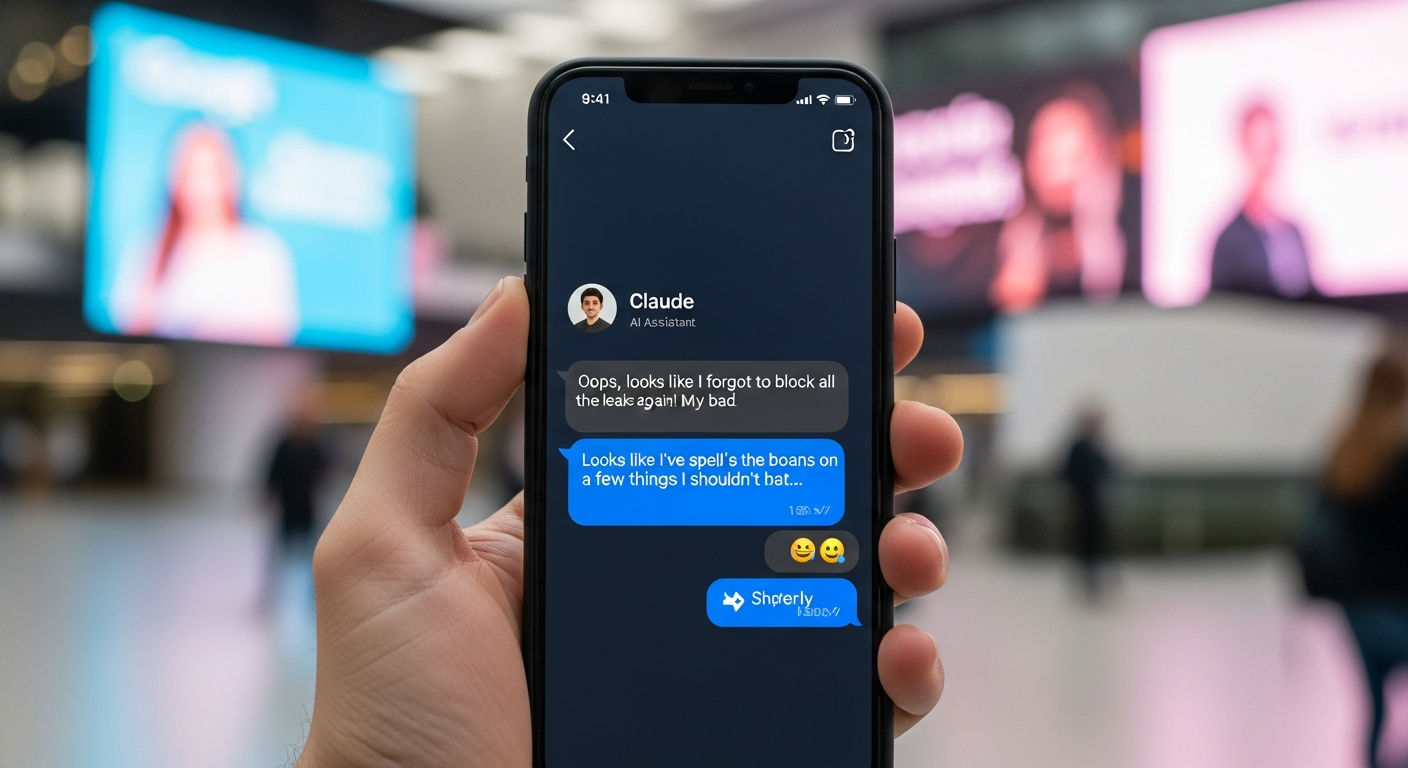
Hundreds of conversations involving the AI chatbot Claude appeared in Google search results and were publicly accessible. This discovery has raised concerns because some of the exposed conversations reportedly contained sensitive data, including medical records and internal company documents, and even the names and phone numbers of children.
The issue was first discovered by Reddit users. They noted that when they typed “site:claude.ai/share” into Google, the search engine returned a long list of Claude’s previously shared conversations via the share chat feature.
In addition to conversations, a number of Artifacts or mini-applications and interactive documents created by users within Claude also appear in search results.
The issue is believed to stem from Claude’s chat sharing feature, which allows users to create links to make conversations or projects viewable by anyone with the URL.
On Claude’s interface it says, “Anyone with the link can view.”
The sentence indicates that the feature is designed for users to share conversations with friends, coworkers, or small groups, not to be indexed and displayed to the entire internet.
In comparison, Google Docs has a similar feature, but shared documents do not automatically appear in Google search results.
Claude’s developer, Anthropic, stated that conversation links will only appear in search results if they were previously published in a place accessible to search engines, such as a forum or social media platform. According to the company, links sent privately to someone will not appear on Google.
“We give users the control to share their Claude conversations publicly, and in line with our privacy principles, we do not share our conversation directories or sitemaps with search engines like Google,” said Anthropic spokesperson Amie Rotherham, as quoted by TechCrunch, Tuesday (28/7/2026).
Shareable links, he said, are not discoverable unless users choose to share them themselves.
So, when someone shares a conversation, they make that content publicly accessible and, like other public web content, can be archived by third-party services.
This case was first highlighted by a Reddit user on Saturday (25/7), then first reported by 404 Media on Monday (27/7) morning.
However, as of Monday afternoon, TechCrunch’s tests using the same search method no longer returned any results on Google, indicating the issue has been addressed.
Before the patch was finally fixed, Futurism reported finding a variety of sensitive data that was publicly accessible, including patient medical reports, clinical trial results that included patient names, documents containing the names and phone numbers of elementary school-aged children, company documents labeled for internal use only, and employee reviews that contained workers’ personal information.
Google spokesman Ned Adriance said that neither Google nor other search engines control which pages are published on the web, and these pages are indexed by many search engines.
“We give site owners clear control over whether pages can be crawled or indexed, and we always respect those directives,” Adriance said.
Claude AI Chat Appears on Google: The Day Anthropic Forgot to Lock the Front Door
I was sipping my third coffee of the morning when I saw the news. A few links popped up on a developer forum, then a screenshot on X, and then the realization hit: Anthropic’s Claude, the darling of “ethical” AI, had its guts spilled across Google Search.
We aren’t talking about marketing pages or documentation. We are talking about actual chat sessions, the private digital whispers between users and an LLM, indexed for anyone with a search bar to find. It’s the kind of technical oversight that makes your stomach drop if you’ve ever managed a production environment. For a company that positions itself as the safer, more responsible alternative to OpenAI, this wasn’t just a glitch. It was a massive crack in the pedestal.
Imagine typing a sensitive snippet of proprietary code or a deeply personal query into what you thought was a private sandbox, only to have Googlebot crawl right through and serve it up to the world. It’s messy. It’s embarrassing. And honestly, it’s a rookie mistake that shouldn’t happen at this level of the game. I’ve spent over half a decade managing web properties and SEO strategies, and if there is one thing we learn in the first week, it’s how to use a robots.txt file. Apparently, even the geniuses building the most sophisticated neural networks in history can forget the basics of web hygiene.
Read More: The Enduring Allure of GadgetsThe Anatomy of a Leak
How does this even happen? In the world of web crawling, Google is like an over-eager guest that enters every room unless the door is explicitly locked and a “Keep Out” sign is taped to the handle. Most modern web applications use a combination of directives to manage this. You have the robots.txt file, which serves as a general suggestion for bots, and then you have noindex tags, which are the equivalent of a legal restraining order for search engines. Somewhere in the deployment pipeline at Anthropic, someone seemingly forgot to check the locks on the shared chat URLs.
I’ve been in those shoes, albeit on a much smaller scale. Years ago, I pushed a staging site to a live environment and forgot to toggle the “Discourage search engines” setting. Within hours, half-baked blog posts and “Lorem Ipsum” pages were ranking for our brand terms. It was a scramble to fix, but I wasn’t handling sensitive user data. Anthropic is. When you are dealing with a platform used by millions for everything from therapy-adjacent venting to corporate strategy, the stakes are exponentially higher. This isn’t just about SEO; it’s about the fundamental contract of trust between a user and their digital assistant.
The technical reality is that as these AI companies scale at breakneck speed, they are building the plane while flying it. They are creating new URL structures for shared chats and public interactions, and in the rush to ship features, the boring stuff—like indexing permissions—gets buried in a Jira ticket. But in this niche, the “boring stuff” is what keeps the lawyers away and the users happy. When a bot finds a path, it follows it. If your URL structure is predictable, or if a single link to a chat session is shared on a public forum, Googlebot will find that thread and pull on it until the whole sweater unravels.
Safety vs. Speed: The AI Developer’s Dilemma
I’m going to be blunt: I’m tired of the “move fast and break things” mantra when it comes to privacy. We’ve seen it with social media, and now we’re seeing it with LLMs. Anthropic has built its entire brand on “Constitutional AI” and safety. They are supposed to be the “adults in the room.” Yet, seeing chat logs indexed on Google feels like a slap in the face to that narrative. It suggests a disconnect between the high-level philosophical safety of the model and the practical, boots-on-the-ground security of the web platform.
If I’m a CTO looking at this, I’m asking myself: if they can’t manage a simple crawl budget or a noindex directive, how can I trust them with my company’s data via an API? It’s a harsh take, I know. But in the world of high-stakes tech, your smallest mistake defines your reputation more than your biggest success. You can have the most helpful, least-biased AI in the world, but if you let Google index my private brainstorming session about a new patent, your helpfulness doesn’t matter. You’ve become a liability.
There’s also the psychological aspect. We talk to AI in a way we don’t talk to search engines. We treat the chat box like a diary or a collaborative partner. The intimacy of the interface creates a false sense of security. When that security is breached—not by a sophisticated hack, but by a simple search crawler—it feels like a betrayal of that intimacy. It reminds us that “the cloud” is just someone else’s computer, and that computer might be leaving the windows wide open.

Fixing the Leak is Only Half the Battle
Anthropic likely scrambled to update their headers and purge the cache as soon as the reports started rolling in. Standard procedure. You throw up an X-Robots-Tag: noindex, you update the robots.txt to disallow /chat/ or whatever the directory structure is, and you use Google Search Console’s removal tool to speed up the process. But Google’s memory is long. Once a URL is in the index, getting it out and making sure it stays out—and that no cached versions remain—is a tedious game of whack-a-mole.
The real fix isn’t just technical; it’s cultural. Companies in the AI space need to stop treating their web interface as a secondary concern to their model architecture. SEO and web architecture are often viewed by “hardcore” engineers as a marketing problem. That is a dangerous delusion. In 2024, your web architecture is your security perimeter. If you don’t have a dedicated team auditing how your site interacts with the open web, you are essentially inviting a data breach. You don’t need a hacker to steal data when you’re literally handing it to a search engine on a silver platter.
I’ve seen plenty of “oops” moments in my career, from leaked API keys on GitHub to open S3 buckets. This indexing issue falls right into that category of “highly preventable disasters.” It serves as a stark reminder for all of us working in the digital space: the basics matter. The foundation of your house needs to be solid before you start worried about the color of the curtains or, in this case, the temperature of the AI’s personality. If you forget to block the leaks, eventually, everyone is going to see what’s inside.
What This Means for You
If you’re a regular user, this is your wake-up call. Stop putting things into AI chats that you wouldn’t want to see on the front page of a search result. It sounds cynical, but it’s the only way to protect yourself. Until these companies prove they can handle the basic plumbing of the internet, treat every chat box like a public forum. Even the “safe” ones. Especially the “safe” ones.
For the developers and SEOs reading this, let it be a lesson. Double-check your headers. Audit your public URLs. Don’t assume that because a page is “private” or requires a login that a bot won’t find a way to peek through a crack in the door. The moment you generate a “shareable link,” you are creating a potential entry point for a crawler. If that link isn’t wrapped in the proper metadata to keep it out of the index, it’s only a matter of time before it shows up in a SERP. Anthropic’s bad day is a free education for the rest of us. Let’s make sure we don’t repeat their mistakes.
At the end of the day, AI is a tool, and like any tool, it’s only as safe as the hands that hold it. Right now, it looks like some of those hands might need a refresher course on Web 101. It’s a messy, loud, and public reminder that in the race to the future, we can’t afford to forget the rules of the past.





Leave a Reply