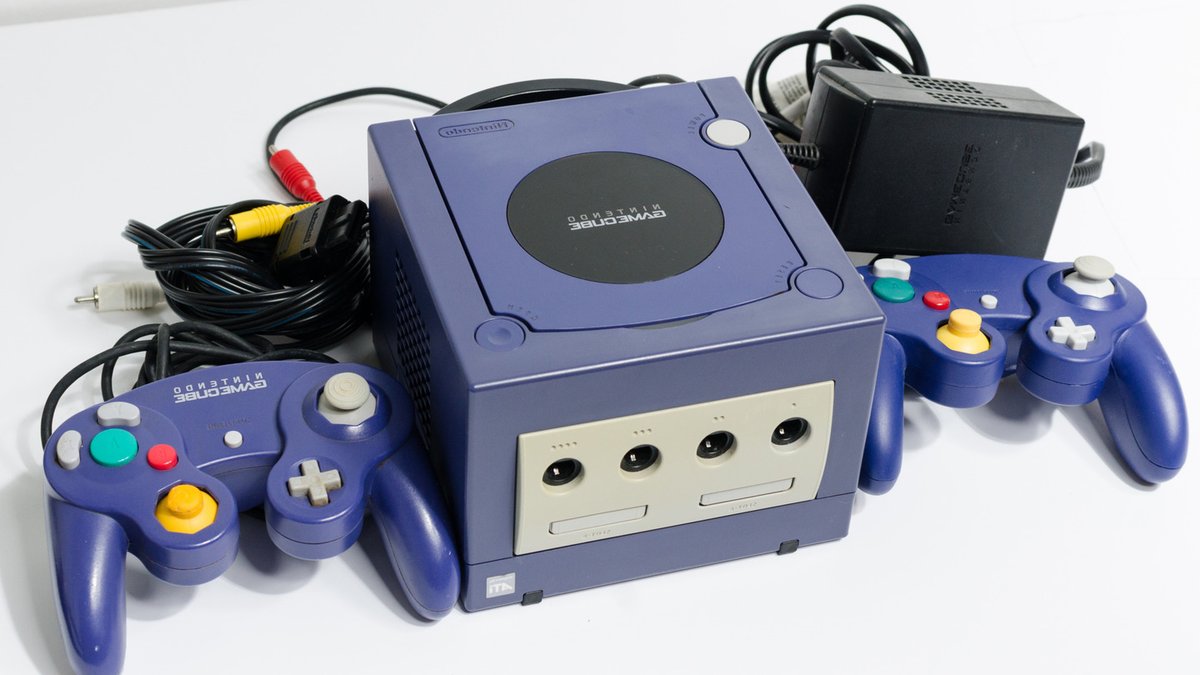
The Nintendo GameCube launched in America on Nov. 18, 2001, with a distinct style that stood out in a market dominated by black hardware. Released alongside black and special edition options, the console’s signature purple color and unique design took many by surprise. However, the shade was not a guaranteed choice for the U.S. market. Leadership at Nintendo of America initially opposed the color, fearing it would not appeal to the average consumer and carry an image problem compared to competitors.
Consoles during that era, including the PS2 and Xbox, were predominantly black, a standard that shaped consumer expectations. Nintendo’s public relations team believed the console’s unusual color might actually hurt sales rather than help it stand out. The decision to stick with purple instead of a silver or black finish was a point of contention between the American branch and the Japanese headquarters. The Japanese leadership insisted the color remain consistent across all global markets, pushing back against the idea of changing it for the U.S. audience.
Former VP of marketing and corporate affairs Perrin Kaplan and former director of corporate communications Beth Llewelyn were among the executives who opposed the purple hue. Kaplan described the shade as more feminine and not masculine enough for the target demographic. Llewelyn expressed concern that the color would not be taken seriously when compared to the black consoles from Sony and Microsoft. Despite these concerns, the purple version was eventually selected as the primary color for the E3 showcase, leading to its widespread release.
More than just purple
The purple console is the most recognizable model, but the system saw dozens of unique designs and colors throughout its lifetime. All variants were fully compatible with the same library of games. The hardware itself was a shift from the standard disc size, utilizing 3-inch optical discs that could hold up to 1.5 GB of data. This format allowed for unique games that pushed the boundaries of the hardware at the time.
Related: Xbox may offer standalone game streaming
While the purple model was the standard in the U.S., other options were available but often harder to find. Nintendo released a Jet Black, Pearl White, and Starlight Gold version to provide variety. They also created bundles with popular titles, including the Pokemon XD Bundle, Resident Evil 4 Console, and Donkey Konga Bundle. In Japan, a Spice Orange version was sold, a highly valued item among collectors. Prices for these unique units can vary, with some collectors paying significant sums to acquire rare variants, sometimes spending more on a vintage GameCube than on a used Wii.
The purple console is the most recognizable model, but the system saw dozens of unique designs and colors throughout its lifetime. All variants were fully compatible with the same library of games. The hardware itself was a shift from the standard disc size, utilizing 3-inch optical discs that could hold up to 1.5 GB of data. This format allowed for unique games that pushed the boundaries of the hardware at the time.
Looking at the hardware choices of that era, it is clear Nintendo was willing to deviate from the industry norm. The company had a history of experimenting with colorways for its handheld systems, like the Game Boy, which offered options ranging from clear purple to green and yellow. This willingness to experiment is a defining characteristic of the company’s approach to hardware design, even when it faced resistance from internal leadership regarding the perceived marketability of such choices. The purple GameCube remains a nostalgic favorite for many, proving that a controversial design choice can sometimes lead to an iconic product.





Leave a Reply