Plug a phone into a modern charger and the first ten minutes are impressive. The next twenty are not. This is not a defect. It’s the connected device protecting itself. As temperature rises during charging, a smartphone’s battery management system reduces the current it will accept, because heat accelerates the chemical degradation that permanently reduces battery capacity. The charger may be capable of delivering more, but the device simply stops taking it.
For anyone building products in the portable power category, this creates an uncomfortable gap between specification and experience. A device rated at 25 watts is accurate in the sense that it can deliver 25 watts. Whether it delivers 25 watts for the duration of a charge is a different question, and one the specification does not answer.
The gap matters commercially because it is invisible at the point of purchase and obvious in use. Consumers compare wattage figures on packaging. They don’t compare thermal curves, because thermal curves are not published publicly. The result is a category where products differentiate on a number that describes peak output rather than sustained output, and where the actual user experience of two products with identical specifications can diverge substantially.
Heat as a design constraint
This is particularly acute in magnetic wireless charging. Inductive power transfer generates heat at both the transmitting and receiving coils, and the magnetic attachment that makes these products convenient also places the heat source in direct contact with the device it is charging. Convenience and thermal performance are working against each other by design.
The industry’s response for the past several years has been materials science. Graphite sheets, thermal interface materials, conductive housings, and heat-spreading layers have all improved how efficiently accumulated heat moves away from the source. Each generation has been incrementally better than the last.
Read Also: Meet the 35 Innovators Under 35
But passive dissipation has a structural limitation: it can only move heat that has already been generated, and only as fast as the surrounding air will accept it. In a sealed, pocket-sized enclosure, that ceiling arrives quickly. Improving the materials slows the rate of temperature rise. It does not prevent the temperature rise.
Active cooling in portable hardware
The alternative is active thermal management, which is standard in stationary electronics and largely absent from portable ones for reasons that are easy to understand. Fans add volume, weight, moving parts, and noise. In a product category defined by portability, each of those is a meaningful cost.
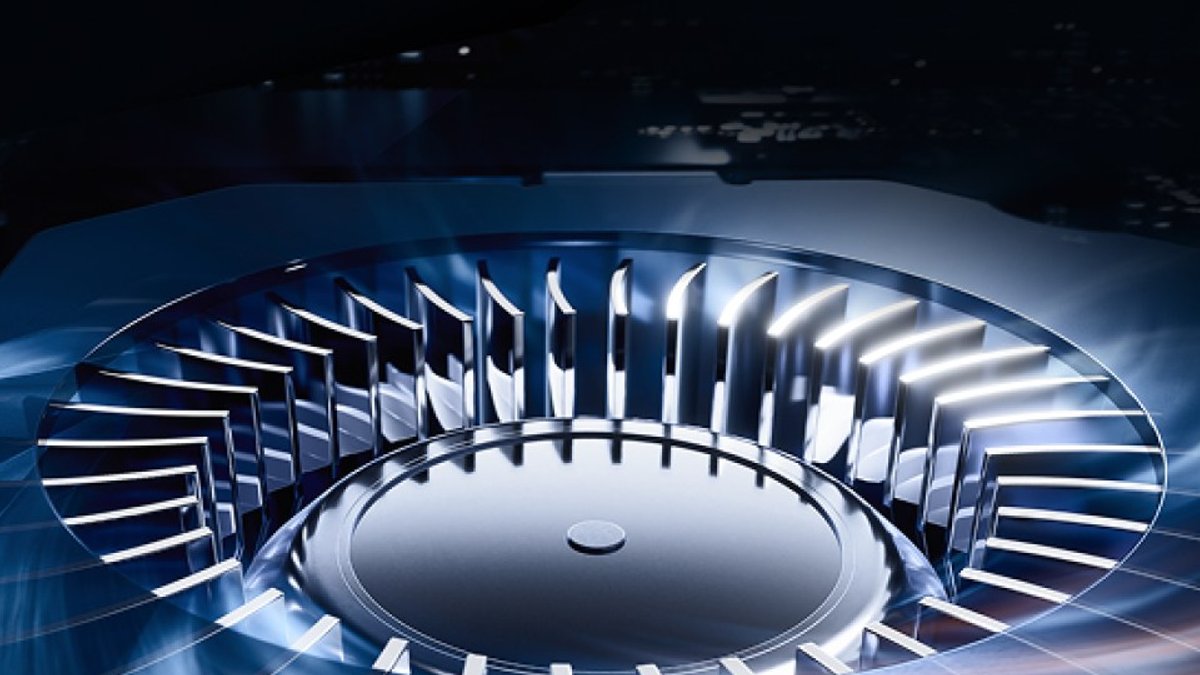
At Anker, which manufactures charging and power products, engineering teams spent the past several development cycles working on whether that tradeoff could be made acceptable rather than eliminated. The approach involves several interacting systems: a micro centrifugal fan, dual airflow channels routed to avoid interference with the magnetic array, a three-layer graphene heat-spreading layer, and a control algorithm that modulates fan speed based on real-time temperature and battery state rather than running at a fixed rate.
The result is that the Anker MagGo Power Bank 2 Pro has become the world’s fastest and coolest wireless power bank. In internal testing, at 77 °F (25 °C) ambient, the back of the power bank stays below 96.8 °F (36 °C) throughout wireless charging. That is 21.6 °F (12 °C) below the international standard limit of 118.4 °F (48 °C), for a comfortable grip. Comparable magnetic power banks in the same testing typically reached 113 °F (45 °C) or higher within 20 minutes.
Performance and transparency
The functional consequence is that the connected device does not reach the threshold at which it begins reducing charge acceptance. So 25 watts of Qi2.2 magnetic wireless charging is delivered as a working rate rather than an opening rate. In practice, an iPhone 17 Pro reaches 50% charge in 25 minutes.
Read Also: AI reshapes how we build memory and storage
The same principle applies in reverse. Recharging a power bank generates heat too, which is why devices in this category are often slow to recharge, leaving users with an empty accessory at the moment they need it. Active cooling during input allows the unit to accept 45 watts and reach 80% in 52 minutes.
The Anker MagGo Power Bank 2 Pro’s premium performance in both charging speed and thermal management is certified by SGS, an independent testing and certification company.
If sustained performance differs meaningfully from peak performance, and if only peak performance is disclosed, then buyers cannot evaluate the products in front of them. This is one reason Anker is adding displays on charging products. The Anker MagGo Power Bank 2 Pro shows real-time power, temperature, battery level, and estimated time remaining. Some of that is user convenience. But some of it is a deliberate position—this category deserves to have the complete and accurate data made transparent to all.
Anker expects independent reviewers to test these claims and considers its internal numbers to be the correct outcome. The gap between specification and experience closes faster when the experience is measurable. The Anker MagGo Power Bank 2 Pro will be available in the U.S. on September 17, 2026.





Leave a Reply