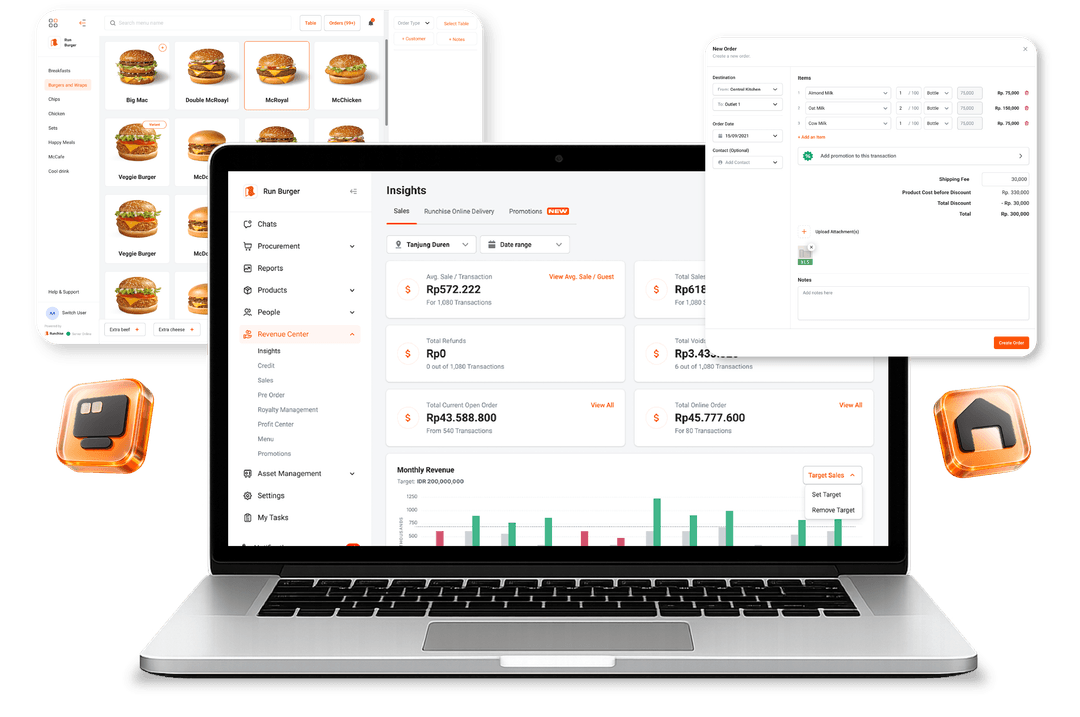
Running a food and beverage (F&B) business has never been more complex. Whether it’s a small café, a growing restaurant chain, or a cloud kitchen serving multiple locations, owners face daily challenges that go far beyond preparing quality food. Inventory management, staff scheduling, customer service, online orders, reporting, and financial tracking all compete for attention.
Many business owners start with separate tools for each function. They may use one system for point-of-sale transactions, another for inventory, spreadsheets for reporting, and messaging apps for staff communication. While this approach may work in the early stages, it often becomes inefficient as the business grows.
Today, more F&B operators are looking for integrated operational systems that connect multiple functions into a single platform. The goal is not simply to automate tasks but to create smoother workflows, better visibility, and stronger decision-making capabilities.
The Growing Complexity of F&B Operations
Consumer expectations continue to evolve. Customers expect fast service, accurate orders, multiple payment options, online ordering capabilities, loyalty programs, and consistent experiences across locations.
At the same time, restaurant owners must deal with rising food costs, labour management, supply chain disruptions, and increasing competition.
Managing all these moving parts manually can lead to errors and inefficiencies. Even small operational issues can affect profitability. For example, inaccurate inventory records may result in over-ordering ingredients, while poor scheduling can lead to understaffing during peak hours.
This growing complexity is one reason integrated management systems have become increasingly important for modern F&B businesses.
Why Data Visibility Matters More Than Ever
One of the biggest challenges for restaurant owners is obtaining accurate information quickly. Decisions often need to be made in real time, especially during busy service periods.
An integrated system provides a central source of information, allowing operators to monitor key performance indicators without switching between multiple platforms. Businesses can gain visibility into:
- Daily sales performance
- Product popularity
- Inventory levels
- Labour costs
- Customer purchasing behaviour
- Multi-location operations
Solutions such as RUNCHISE reflect the growing demand for platforms that bring operational data together into a unified environment, helping owners spend less time gathering information and more time acting on it.
The Benefits of Centralising Restaurant Operations
One common issue in growing F&B businesses is fragmented information. Different departments often operate using separate systems that do not communicate effectively with one another.
When information is centralised, teams can work more efficiently because everyone is accessing the same data.
Some advantages of centralisation include:
- Reduced duplicate data entry
- Improved accuracy
- Faster reporting
- Better communication between departments
- More consistent operational processes
For multi-location businesses, centralisation becomes even more valuable because managers can oversee multiple outlets through a single dashboard rather than monitoring each location separately.
Inventory Management Can Make or Break Profitability
Food costs remain one of the largest expenses for restaurants and cafés. Even small inefficiencies can significantly impact profit margins over time.
Without proper inventory control, businesses may experience:
- Excessive food waste
- Stock shortages
- Unnecessary purchases
- Inaccurate forecasting
- Difficulty tracking ingredient usage
An integrated operational platform can connect inventory data directly to sales transactions, making stock management more accurate and easier to maintain.
For example, when a menu item is sold, ingredient quantities can automatically update within the inventory system. This reduces manual work while providing a clearer picture of actual stock levels.
Improving Staff Productivity Through Automation
Many restaurant owners spend a significant portion of their time handling administrative tasks rather than focusing on growth initiatives.
Automation can reduce repetitive work across several areas, including:
- Employee scheduling
- Payroll preparation
- Inventory tracking
- Sales reporting
- Customer communications
- Order management
When routine processes become automated, managers can focus more on customer experience, staff development, and business strategy.
Automation does not replace human decision-making. Instead, it removes unnecessary manual tasks that consume valuable time and increase the likelihood of errors.
Supporting Better Customer Experiences
Customer experience remains one of the most important drivers of long-term success in the F&B industry. Even excellent food may not be enough if service is slow, orders are inaccurate, or customer preferences are overlooked.
Modern operational systems can support customer experience initiatives by providing access to useful insights, including:
- Purchase histories
- Loyalty programme participation
- Preferred ordering patterns
- Customer feedback trends
These insights help businesses personalise interactions and improve service quality.
For example, understanding which menu items perform best during specific times of day can help optimise staffing and inventory levels, leading to faster service and improved customer satisfaction.
Multi-Channel Selling Requires Better Integration
Today’s customers interact with restaurants through multiple channels. A single business may receive orders through:
- In-store dining
- Takeaway services
- Mobile applications
- Third-party delivery platforms
- Online ordering systems
- Social media promotions
Managing these channels separately can become difficult as order volumes increase.
Integrated operational platforms help consolidate information from different sales channels, making it easier to manage orders, track performance, and maintain consistency across customer touchpoints.
This capability is becoming increasingly important as digital ordering continues to play a larger role in the F&B industry.
Preparing for Sustainable Growth
Many businesses focus on solving immediate operational problems without considering long-term scalability. However, systems that work well for a single location may struggle to support expansion.
An all-in-one operational platform can provide a stronger foundation for future growth by standardising processes and improving visibility across the organisation.
As businesses expand, they often need:
- Consistent reporting frameworks
- Standardised workflows
- Centralised data management
- Multi-location oversight
- Better forecasting capabilities
Having these capabilities in place early can reduce growing pains and support smoother expansion efforts.
Technology alone does not guarantee success, but it can provide the structure needed to manage increasing complexity effectively.
Conclusion
The food and beverage industry continues to evolve rapidly, creating both opportunities and challenges for business owners. As operations become more complex, relying on disconnected tools and manual processes can limit efficiency and growth potential.
Integrated operational systems offer a practical solution by bringing together key functions such as sales, inventory management, reporting, customer insights, and workforce management into a single environment. This approach helps businesses improve visibility, reduce inefficiencies, and make more informed decisions.
Rather than viewing technology as simply another expense, many successful operators now see it as a strategic asset. By investing in systems that streamline operations and support scalability, F&B businesses can position themselves more effectively for long-term success in an increasingly competitive market.





Leave a Reply